Approaching the Kaaba: Understanding the Dangers for Non-Muslim Visitors
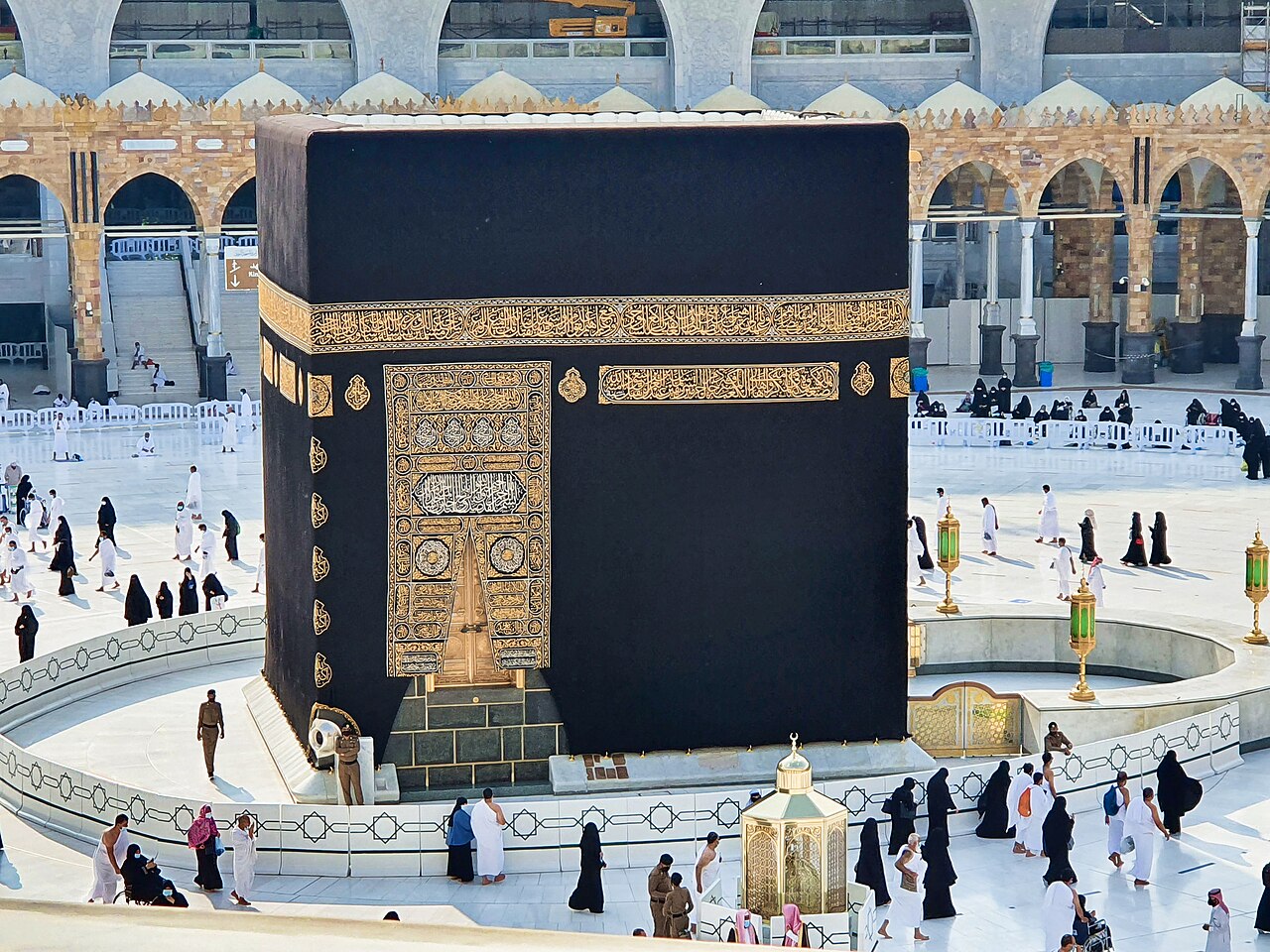
The Kaaba, a cubic structure draped in black silk, stands at the heart of the Grand Mosque in Mecca, Saudi Arabia. It is the holiest site in Islam, the focal point of Muslim prayer worldwide, and the destination for millions of pilgrims during the annual Hajj. Its profound spiritual significance draws an undeniable curiosity, especially regarding its mysterious interior – a fascination often encapsulated by the German phrase
Kaaba von Innen (Kaaba from inside). However, for non-Muslims, even approaching the sacred precincts of Mecca and Medina carries not just strict prohibition but also significant historical and contemporary dangers. This article delves into the profound sanctity of the Kaaba, the stringent restrictions on non-Muslims, the historical perils faced by those who dared to defy them, and the modern realities of these prohibitions.
The Kaaba's Sanctity and Exclusive Access
At the very core of Islamic practice and belief lies the Kaaba. It is revered as the "House of God" (Bayt Allah) and serves as the Qibla, the direction Muslims face during their five daily prayers. This unparalleled sanctity necessitates its preservation as an exclusively Muslim sanctuary. Islamic law and, consequently, Saudi Arabian state law, strictly forbid non-Muslims from entering the holy cities of Mecca and Medina, let alone approaching or entering the Kaaba itself. This restriction isn't merely a cultural custom; it is deeply rooted in religious doctrine, aiming to protect the sanctity and spiritual purity of these sacred spaces for the purpose of worship.
Historically, the consequences for non-Muslims found within these forbidden zones were dire, ranging from imprisonment and public humiliation to, in extreme cases, the death penalty. While contemporary enforcement has evolved, the underlying prohibition and the potential for severe legal repercussions remain. This stricture means that the widespread curiosity about the
Kaaba von Innen remains unfulfillable for non-Muslims through direct access, prompting many to seek historical accounts or academic insights into its architecture and contents. To understand more about how its internal space is perceived, you might find
Kaaba's Sacred Interior: A Historical Quest for Access enlightening.
A Historical Precedent: The Perilous Journey of Heinrich von Maltzan
To truly grasp the magnitude of the dangers involved, one can look to the historical accounts of intrepid, or perhaps foolhardy, non-Muslim explorers who attempted to circumvent these prohibitions. One such remarkable and harrowing journey was undertaken by the German traveler and scholar Heinrich Freiherr von Maltzan in 1860. Driven by an insatiable thirst for knowledge and an academic interest in the Islamic world, Maltzan conceived of a plan to undertake the Hajj as a Muslim pilgrim. This endeavor was not merely a bold adventure; it was a high-stakes gamble with his life.
Maltzan's preparations were meticulous and morally complex. Having spent many years in Muslim North Africa and being well-versed in Arabic language and Islamic customs, he understood the profound risks. He adopted the persona of an Algerian Maghrebi, assuming the identity of a man named Sidi Abd-er-Rahman ben Mohammed es Skikdi. This involved not just learning the nuances of the local dialect and religious practices, but also obtaining a genuine passport from a real individual, who had to be temporarily paid to leave Algeria to avoid discovery. Maltzan then underwent a painstaking physical transformation in Malta to align his appearance with his assumed identity, constantly living under the immense pressure of potential exposure.
His journey to Mecca was fraught with peril, a testament to the dangers of approaching the Kaaba under false pretenses. Instead of taking the more convenient route via Suez, Maltzan opted for a more arduous path across the Nile to Kene and then by caravan through the desert to Kosseir, before crossing the Red Sea. He chose this more difficult route specifically to avoid scrutiny, reasoning that he could more easily evade dangerous encounters or suspicious pilgrims who might question his authenticity. Traveling on crowded third-class passages, sleeping on rudimentary vessels, and enduring physical hardships, every interaction was a test of his assumed identity. The constant fear of being unmasked, which carried a historical death sentence, was an ever-present companion. Even upon reaching Jeddah, the port city for Mecca and itself considered holy due to the purported Tomb of Eve, the sheer multitude of pilgrims from across the globe presented both a challenge and a cover for his deception. Maltzan's story vividly illustrates the extraordinary lengths and inherent dangers involved in even approaching the sacred cities, let alone satisfying a curiosity about the
Kaaba von Innen as a non-Muslim.
Beyond Deception: Understanding Modern Realities and Restrictions
While Heinrich von Maltzan's daring exploit belongs to the 19th century, the fundamental prohibitions against non-Muslim entry into Mecca and Medina remain firmly in place. Today, Saudi Arabia enforces these laws with advanced security measures, including comprehensive surveillance, numerous checkpoints, and rigorous visa processes that explicitly restrict non-Muslims from obtaining Hajj or Umrah visas. The penalty for violating these laws, while perhaps less frequently resulting in the death sentence specifically for unauthorized entry, can still be extremely severe. Non-Muslims found within the holy cities face immediate arrest, hefty fines, lengthy imprisonment, and deportation. Cases involving espionage or other perceived threats could, however, still carry more extreme legal consequences under the broader Saudi legal framework.
The desire to see the
Kaaba von Innen is therefore not just an act of defiance but a direct violation of deeply held religious principles and national laws. From an Islamic perspective, the Kaaba is not a tourist attraction but a place of profound veneration and spiritual purification, reserved for those who share the faith. Any attempt by non-Muslims to trespass is seen as a desecration of its sanctity. The modern world, with its heightened security concerns and complex geopolitical landscape, only amplifies the risks involved in such unauthorized attempts.
Navigating Holy Sites: Respect, Safety, and Alternative Engagement
For non-Muslims interested in understanding the Kaaba and Islamic culture, the path forward must be one of respect and ethical engagement, rather than perilous deception. There are numerous legitimate and safe ways to learn about the Kaaba's exterior and its immense significance:
*
Scholarly Resources: Reputable books, academic journals, and well-researched documentaries offer profound insights into the history, architecture, and spiritual dimensions of the Kaaba.
*
Virtual Tours and Digital Media: With advances in technology, high-quality virtual tours and immersive digital experiences can provide a respectful and accessible glimpse into the Grand Mosque and the Kaaba's surroundings, offering a visual understanding without crossing sacred boundaries.
*
Visiting Open Mosques: Many other beautiful mosques and Islamic heritage sites around the world, and even in Saudi Arabia (outside Mecca and Medina), are open to non-Muslim visitors. These provide excellent opportunities to appreciate Islamic architecture, art, and culture firsthand, fostering interfaith understanding in a respectful environment. The unique architectural design of the Kaaba itself stands apart from most mosques; for more on this distinction, consider reading
Kaaba's Unique Design: Why Mosques Differ Architecturally.
*
Cultural Exchange: Engaging with Muslim communities and scholars in your own country or during travel to other Muslim-majority nations can provide invaluable personal insights and a deeper appreciation for Islamic faith and practices.
It is paramount to respect the religious laws and cultural sensitivities associated with holy sites globally. For non-Muslims, attempting to gain unauthorized entry to Mecca and Medina is not only illegal and dangerous but also a profound disrespect to the millions who hold these sites sacred.
Conclusion
The Kaaba stands as a powerful symbol of faith, drawing Muslims from every corner of the globe. While the allure of exploring the
Kaaba von Innen might be strong for the curious non-Muslim, the historical accounts and modern realities underscore the severe dangers and prohibitions involved. From the life-threatening deceptions of historical figures like Heinrich von Maltzan to the stringent legal consequences of today, the message is clear: the sacred precincts of Mecca and Medina are exclusive to Muslim worshippers. True understanding and appreciation for the Kaaba and Islamic heritage should always be pursued through respectful, legal, and ethical channels, honoring the sanctity and traditions that have defined these holy sites for centuries.