The Kaaba's Unique Design: Why Mosques Differ Architecturally
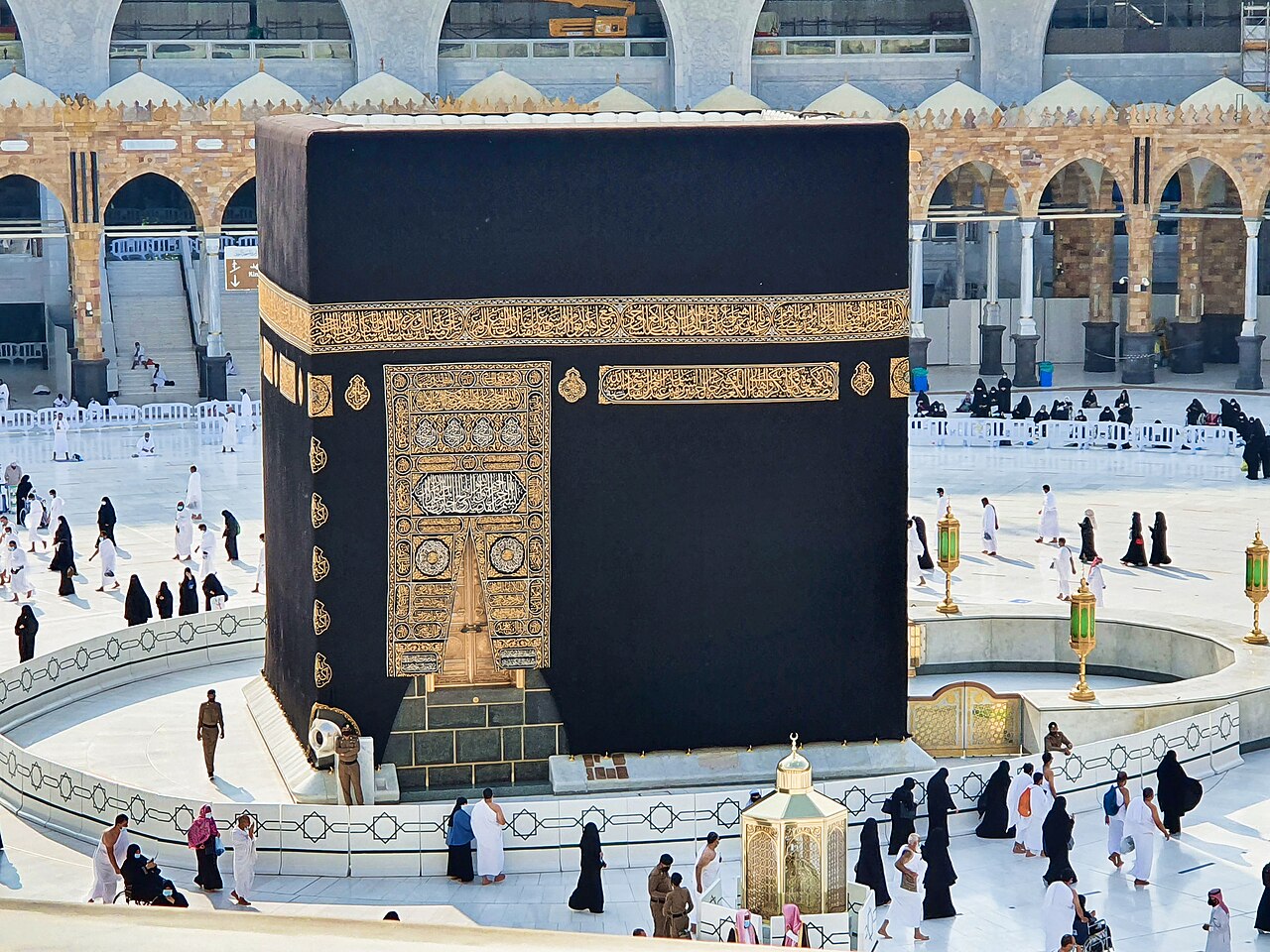
The Kaaba stands as the spiritual epicenter of Islam, an unadorned cuboid structure in the heart of Mecca, Saudi Arabia. Its profound simplicity belies an immense spiritual significance, serving as the Qibla – the direction towards which Muslims worldwide turn in prayer. Yet, when we look at the breathtaking diversity of mosque architecture across the globe, from the majestic Ottoman domes to the intricate Moorish arches and the soaring minarets of Southeast Asia, a striking question emerges: Why do mosques, despite their devotion to the Kaaba, almost never replicate its distinct, cuboid design? The answer lies in a fascinating interplay of function, symbolism, and historical evolution, deeply intertwined with the sacred concept of the Kaaba itself, and the profound mystery surrounding the
Kaaba's Sacred Interior, or "Kaaba Von Innen."
The Kaaba: A Symbol of Unity, Not a Blueprint for Worship
At its core, the Kaaba's design is not a functional architectural blueprint for congregational worship but a powerful symbol. Its cubic form, devoid of ostentatious decoration on its exterior, is a deliberate statement of divine unity (Tawhid) and humility. It represents a focal point, a unifying beacon for Muslims globally, signifying a common direction and purpose in their devotion. The Kaaba is the "House of God" (Bayt Allah), a primordial sanctuary believed to have been built by Abraham and Ishmael. Its function is to be *the* singular direction of prayer, not a template for the varied spaces where those prayers are offered.
The concept of "Kaaba Von Innen," or the interior of this sacred structure, further clarifies its unique status. Unlike a mosque, the Kaaba's interior is not designed for public congregational prayer. Historical accounts describe it as a relatively sparse space, adorned with lamps and inscriptions, a testament to its singular, unparalleled sacredness. Access to this inner sanctum is extremely limited, reserved for specific occasions and dignitaries, reinforcing its status as a uniquely consecrated space, distinct from the communal function of a mosque.
Architectural Evolution: Influences Shaping Mosque Design
Mosques, in contrast, are functional buildings designed to accommodate congregational worship, spiritual instruction, and community gatherings. Their architecture has evolved over centuries, drawing inspiration from diverse cultural and historical contexts while adapting to practical needs.
Early mosques, such as the Prophet's Mosque in Medina, were often simple, open courtyards with shaded areas, reflecting the nascent stage of Islamic community life. As Islam spread, so did the need for larger, more structurally sound places of worship. This expansion brought Muslim architects and patrons into contact with established architectural traditions, particularly those of the Byzantine and Sasanian empires.
*
Byzantine Influence: The domed structures and arch designs prevalent in Byzantine churches and Roman basilicas proved highly adaptable for creating large, open prayer halls. Domes provided expansive, column-free spaces and became a hallmark of mosque architecture, especially in regions like Anatolia and the Levant, culminating in the grandeur of Ottoman mosques.
*
Local Materials and Techniques: Mosque design also naturally integrated local building materials and techniques. In North Africa and Spain, mud-brick and intricate tilework defined Moorish architecture. In Persia and Central Asia, the use of vibrant blue tiles and soaring iwans (vaulted halls) became iconic. In Southeast Asia, indigenous wooden structures and multi-tiered roofs were adapted.
*
Functional Requirements: Mosques require specific elements for their function:
* The *mihrab*, an alcove indicating the Qibla (direction of the Kaaba).
* The *minbar*, a pulpit from which the imam delivers sermons.
* A large prayer hall to accommodate worshippers, often segregated by gender.
* A *sahn* (courtyard) for open-air prayer and ablution facilities.
* *Minarets*, from which the call to prayer (adhan) is traditionally issued.
These functional and aesthetic considerations led to the development of distinct architectural styles that were practical, beautiful, and culturally resonant, bearing little resemblance to the Kaaba's symbolic cube.
The Sacred Inaccessibility: What "Kaaba Von Innen" Truly Implies
The mystique surrounding the "Kaaba Von Innen" is not merely about its physical appearance but profoundly about its sacred exclusivity and the historical, spiritual significance of access. For centuries, and even today, the Kaaba and the city of Mecca have been considered sacred zones, strictly reserved for Muslims. This deeply rooted spiritual injunction has historical precedents that underscore the immense reverence and protection afforded to this holy site.
One of the most compelling illustrations of this sacred inaccessibility, especially for non-Muslims, comes from the daring journey of Heinrich Freiherr von Maltzan in 1860. As a German traveler, his quest to merely *see* the Kaaba, let alone ponder the "Kaaba Von Innen," was fraught with peril. Under Islamic law, historically, a non-Muslim found in Mecca could face the death penalty. Maltzan's meticulous and perilous expedition offers a vivid insight into the lengths one had to go to approach such a sacred site.
*
The Deception: Maltzan undertook a dangerous masquerade, spending years in Muslim North Africa to master the language and customs. He acquired a passport from a struggling Algerian Muslim, compelling the man to temporarily leave Algiers while Maltzan assumed his identity as "Sidi Abd-er-Rahman ben Mohammed es Skikdi," an Algerian Maghrebi and a *Hadsch* (pilgrim).
*
The Transformation: In Malta, he meticulously transformed his appearance to convincingly pass as an Arab, even traveling third class as denoted on his acquired passport, to maintain his disguise.
*
The Perilous Journey: His route was intentionally circuitous and arduous – from Malta to Alexandria, then by train to Cairo, up the Nile, through the desert to Kosseir, and finally by a rudimentary vessel across the Red Sea to Jeddah. He deliberately avoided more convenient but potentially more dangerous routes like Suez, where he might encounter those who knew his true identity.
*
Jeddah and Eve's Tomb: Arriving in Jeddah, a holy city due to the legendary tomb of Eve, Maltzan witnessed a multitude of pilgrims. He even participated in the prescribed pilgrimage to the legendary tomb, said to be an astonishing 150 meters long according to Islamic tradition.
*
The Final Stretch: The journey from Jeddah to Mecca was the ultimate culmination of his perilous quest, representing the gravest risk and the most profound spiritual significance.
Maltzan's account is a testament not to the architectural features of the "Kaaba Von Innen," but to the immense spiritual weight and protective sanctity surrounding the Kaaba and Mecca. It underscores that understanding the Kaaba's interior isn't merely about physical description, but about appreciating its unique, guarded status as the sacred heart of Islam. The dangers for non-Muslim visitors approaching such sites historically have been immense, highlighting a profound respect for its sacred boundaries. You can learn more about these historical quests and the challenges faced in
Approaching the Kaaba: Dangers for Non-Muslim Visitors.
Function vs. Symbolism: The Core Distinction
Ultimately, the reason mosques differ so significantly from the Kaaba lies in their differing fundamental purposes. The Kaaba is the singular, symbolic House of God, a pre-existing divine focal point. Its design is perfect in its simplicity, serving as the universal direction of prayer. It does not need to be replicated because its power is in its singular, unique existence.
Mosques, on the other hand, are man-made structures built for the practical facilitation of communal worship and Islamic life. They are designed to bring people together, provide shelter, encourage contemplation, and serve as community hubs. While every mosque is oriented towards the Kaaba, facing it in prayer, its physical form is free to adapt, innovate, and express the rich tapestry of Islamic art and culture across the globe. This allows for an incredible range of architectural styles, each reflecting local heritage, available resources, and prevailing artistic trends, all unified by their shared spiritual direction towards the sacred Kaaba.
Conclusion
The Kaaba stands as an unparalleled monument in Islam, its simple cuboid form embodying profound spiritual unity and divine presence. The mystery and reverence surrounding its interior, the "Kaaba Von Innen," underscore its unique, sacred status, far removed from the functional requirements of a typical mosque. Mosque architecture, by contrast, is a vibrant and diverse testament to human ingenuity and cultural expression, evolving over centuries to serve the practical needs of congregational worship while reflecting regional aesthetics and historical influences. Both the Kaaba and the world's mosques, each in their distinct forms, contribute to the rich and complex tapestry of Islamic faith and civilization, forever linked by a shared devotion to the One God and a unified direction of prayer.